
Core Members

Clare Aslan, Ph.D.
Co-director
Clare Aslan is co-director of the Center for Adaptable Western Landscapes. She also serves as an associate professor and associate director of the School of Earth and Sustainability. She performs solutions-oriented research targeting critical conservation challenges that span disciplines, scales, and systems. Her research interests include global biodiversity implications of mutualism disruption and novel mutualism formation; cross-boundary connectivity; endangered species conservation; plant-animal interactions; restoration of interspecific interactions; socioecological dynamics; and social-ecological resilience. She has authored or co-authored more than 40 peer-reviewed publications. She has advised 28 graduate students, including eight doctoral students. Clare is a lifetime member of the Society for Conservation Biology and was a Smith Conservation Postdoctoral Fellow. She was awarded NAU’s Most Promising New Scholar Award in 2018
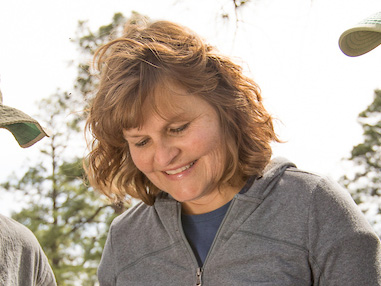
Catherine A. Gehring, Ph.D.
Co-director
Catherine “Kitty” Gehring is co-director of the Center for Adaptable Western Landscapes and the Lucking Family Professor, Department of Biological Sciences. Her research interests are plant-associated fungi and their influence on plant populations and communities and ecosystems in basic and applied contexts. She has authored or co-authored 116 peer-reviewed publications. Additionally, she has mentored three postdoctoral research associates, 21 graduate students, and more than 69 undergraduate students in the Gehring Lab. Kitty is a Ecological Society of America Fellow and has served as the John and Pit Lucking Family Professor since 2018.
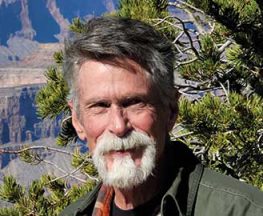
Gerald J. Allen, Ph.D.
Core Member
Gerard “Gery” Allan is a core member of the Center for Adaptable Western Landscapes and professor in the Department of Biological Sciences. Gery’s research interests lie along the intersection of molecular genetics and ecology, with a special emphasis on the ecology and genetics of cottonwood trees in arid, southwestern environments. He has authored or co-authored 63 peer-reviewed publications. Additionally, Gery has mentored 4 postdoctoral research associates, 20+ graduate students, and numerous undergraduate students as part of NAU’s Environmental Genetics and Genomics facility within the Department of Biological Sciences.
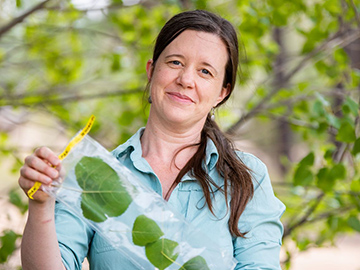
Rebecca Best, Ph.D.
Core Member
Rebecca Best is a core member of the Center for Adaptable Western Landscapes and an Associate Professor in the School of Earth and Sustainability. She is an aquatic community and evolutionary ecologist interested in the processes that determine the number and type of species coexisting in a particular community, and the way those communities function. Her lab works on the effects of climate on aquatic connectivity, species distributions, and the ecology and evolution of riparian tree traits.
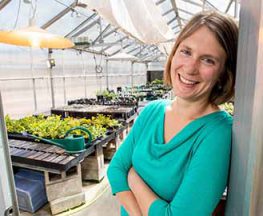
Liza M. Holeski, Ph.D.
Core Member
Liza Holeski is core member of the Center for Adaptable Western Landscapes and an associate professor, Department of Biological Sciences. Her research interests include plant evolutionary genetics; plant-herbivore interactions, plant response to changing climate; and quantitative genetics and trait evolution in plant populations. Liza has authored or co-authored 34 peer-reviewed publications. Additionally, Liza has mentored more that 40 undergraduate students, including ten minority students who completed independent research projects as the result of her mentorship efforts. Liza currently serves on the editorial board of Functional Ecology, and she routinely serves as an external review for national and international science organizations and journals.
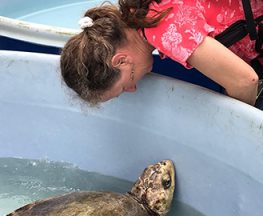
Erika Nowak, Ph.D.
Core Member
Dr. Nowak is a core member of the Center for Adaptable Western Landscapes and an Assistant Research Professor in the School of Earth and Sustainability and the Department of Biological Sciences. She is the Curator of Herpetology in the NAU Vertebrate Teaching Collections and the representative of the former NAU Colorado Plateau Research Station. Her research interests and passions are in the ecology, behavior, conservation, and science-based management of venomous reptiles and federally threatened narrow-headed and Mexican gartersnakes. Erika and her research team, including undergraduate, post-baccalaureate, and graduate students, conduct surveys, ecological studies, and biomonitoring for rattlesnakes, gartersnakes and other species throughout the southwestern US. They developed the first university-based, student-run facility dedicated to improving narrow-headed gartersnake captive breeding and husbandry, under the NAU Gartersnake Research Program. Through classes and internships, students assist with captive husbandry of narrow-headed gartersnakes, field surveys, and biomonitoring for aquatic species, and develop independent projects that complement ongoing research.
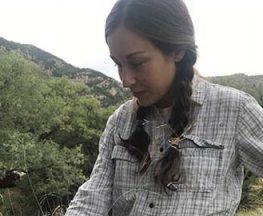
Sara Souther, Ph.D.
Core Member
Sara Souther is a core member of the Center for Adaptable Western Landscapes, an assistant research professor in the School of Earth and Sustainability and the Emory Oak Endowed Chair. Her research interests include population ecology and demographic modeling; local and Indigenous resource management and conservation; interacting drivers of rarity in native plant species; restoration of grassland and forested systems in the southwest; and collaborative, cross-disciplinary approaches to conservation, sustainability, and land management. She has conducted research across a variety of ecosystems from Alaska to Arizona. Sara is dedicated to outreach, mentorship, and training to promote participation of underrepresented groups in STEM and advance science-based solutions for conservation challenges in an increasingly human-dominated landscape. Sara is a lifetime member of the Society for Conservation Biology.
Amy Vaughn Whipple, Ph.D.
Core Member
Amy Whipple is a core member of the Center for Adaptable Western Landscapes. She is also an associate chair and an associate professor in the Department of Biological Sciences. Amy’s area of interest is evolutionary ecology, with a current focus on plant adaptation to drought, cold, and climate change. She is also interested in the ways genetic architecture and evolution interact. Amy has led efforts to develop field research facilities, including the Southwest Experimental Garden Array and the Merriam-Powell Research Station. Having mentored too many undergraduate students to count, Amy has a long-standing interest in both graduate and undergraduate student research training. Through her work on NAU’s Research Experiences for Undergraduates program and in collaborations with Steve Chischilly at Navajo Technical University she seeks to learn from indigenous students, faculty, and land managers.
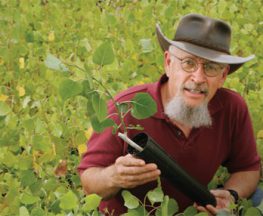
Thomas G. Whitham, Ph.D.
Core Member
Tom Whitham is a core member of the Center for Adaptable Western Landscapes and a Regents’ Professor, Department of Biological Sciences. A major emphasis of his research is the use of a genes-to-ecosystem approach to restore threatened poplar riparian communities and pinyon woodlands in the western United States. Tom served as the executive director of NAU’s Merriam-Powell Center for Environmental Research from 1999 until 2020. He has authored or co-authored 273 peer-reviewed publications that have appeared top-ranked journals, including Science and Nature. Additionally, he has mentored 32 successful Ph.D candidates and 29 master’s students. Tom has received numerous awards and honors, including the Eminent Ecologist Award presented by the Ecological Society of America. In 2020, he was honored with a Life Time Achievement Award, Department of Biological Sciences, Northern Arizona University.